Introduction
For archery retailers and pro shops, revenue growth often depends less on selling more units and more on improving margin, loyalty, and pricing power. OEM custom branding offers a practical way to do that by turning generic inventory into exclusive products customers can only get from your business. This article explains how private-label bows and accessories can raise profit per sale, reduce direct price competition, and strengthen repeat purchases. It also shows which product categories are the best starting points, helping you evaluate whether custom branding is a realistic next step for your archery business.
Why OEM Custom Branding in Archery Can Increase Revenue
Archery pro shops and online retailers often fight for scraps on profit margins. When you sell established name brands, you compete purely on price against massive online warehouses. Stepping into the world of custom branding changes the game entirely. By developing your own product lines, you stop being just another distributor and start building real equity. You control the pricing, marketing, and overall customer experience from start to finish.
How Private Label Archery Products Improve Margin and Repeat Sales
The math behind custom branding is compelling. When stocking standard industry brands, you might see gross margins between 20% and 35%. However, sourcing Private label bows and accessories directly from a manufacturer can push margins up to 55% or even 75%. Beyond the immediate cash flow bump, you lock in repeat sales. If a bowhunter loves a micro-adjust sight or carbon stabilizer carrying your shop’s logo, they have to return to you for their backup rig. They cannot cross-shop these items online. This brand loyalty generates organic word-of-mouth marketing at the local 3D range that money simply cannot buy.
Which Archery Categories Are Best Suited for OEM Branding
Not every product is a smart starting point. It is generally best to begin with high-margin accessories rather than complex mechanical items. Compound bows carry high liability and require massive R&D budgets. Conversely, machined aluminum accessories, soft goods, and arrow components offer a smoother entry point with a faster return on investment.
Here is a quick breakdown of how categories stack up:
| Category | Typical MOQ | Estimated Margin | Liability Risk |
|---|---|---|---|
| Bow Accessories | 300 – 500 units | 50% – 65% | Low |
| Soft Goods | 500 – 1000 units | 60% – 75% | Very Low |
| Target Gear | 200 – 500 units | 45% – 60% | Low |
| Compound Bows | 100 – 300 units | 35% – 50% | High |
What to Compare When Choosing an OEM Archery Manufacturer
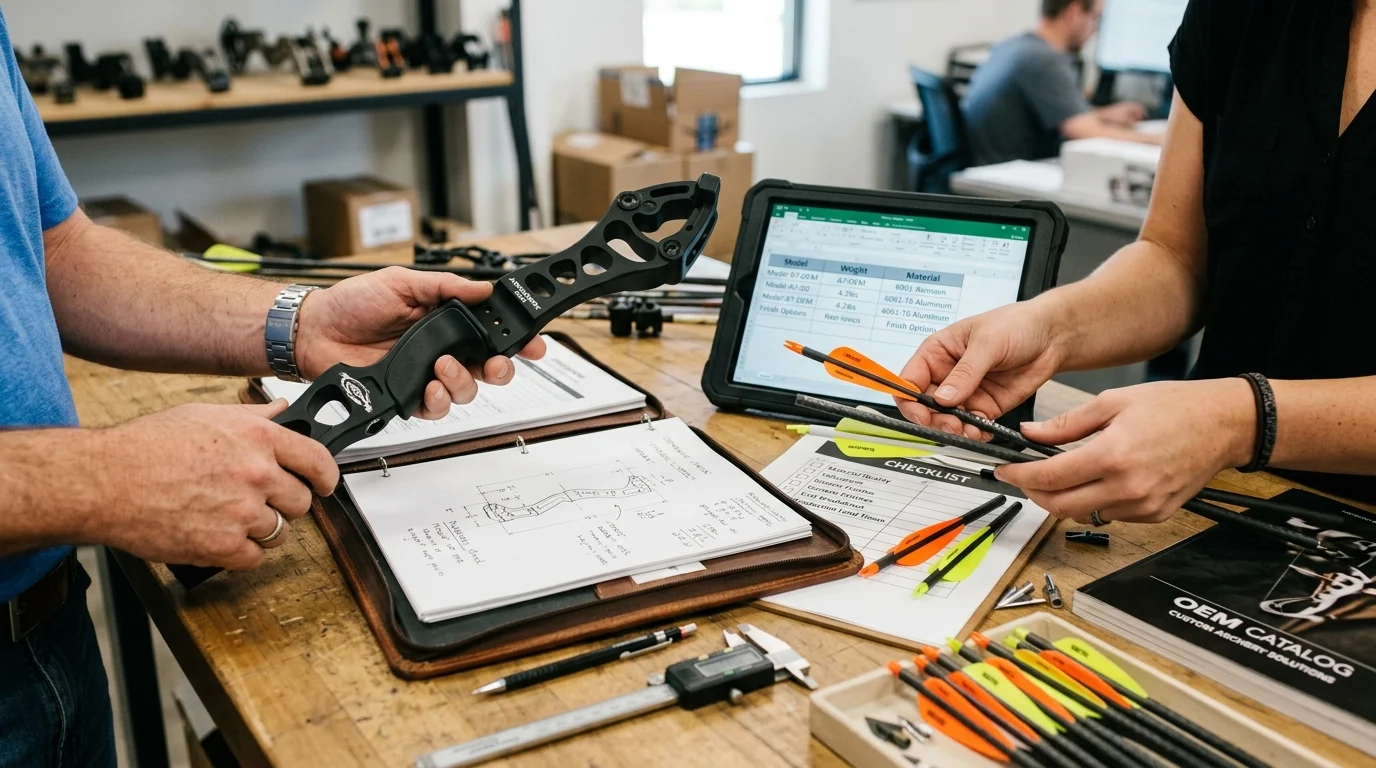
Finding the right factory is the next major hurdle. A slick website does not always equal a reliable factory floor. You need a partner who actually understands the physics of archery, not a generic metal shop making a quick buck. Clear communication, an engineering background, and a proven track record in the sporting goods sector are absolutely non-negotiable.
How to Evaluate Design Capability, Patents, and Machining Quality
Your first priority is evaluating their engineering capabilities. A great manufacturer brings over two decades of dedicated sports equipment experience to the table. You want to see advanced CNC machining facilities capable of holding tolerances down to +/- 0.002 inches, which is critical for dynamic components like release aids. Furthermore, you must ask about intellectual property. The last thing you want is to import a batch of Custom archery gear only to receive a cease-and-desist letter because the factory copied an existing design. Look for partners who own domestic and international patents and dedicate serious resources to R&D.
What to Check for Cost, Compliance, Lead Time, and Logistics
Next, look at the specifics of the manufacturing agreement. For machined accessories, expect Minimum Order Quantities (MOQs) to hover around 300 to 500 units per color. A well-run factory usually needs 45 to 60 days for production, plus 30 days for ocean freight. You also need to verify compliance with industry standards, especially when sourcing items under tension like bowstrings. Always negotiate your Wholesale customization terms upfront. Clearly define who pays for initial tooling, what the sampling costs are, and what the after-sales service covers if a batch arrives with anodizing flaws.
How to Build a Low-Risk OEM Archery Program
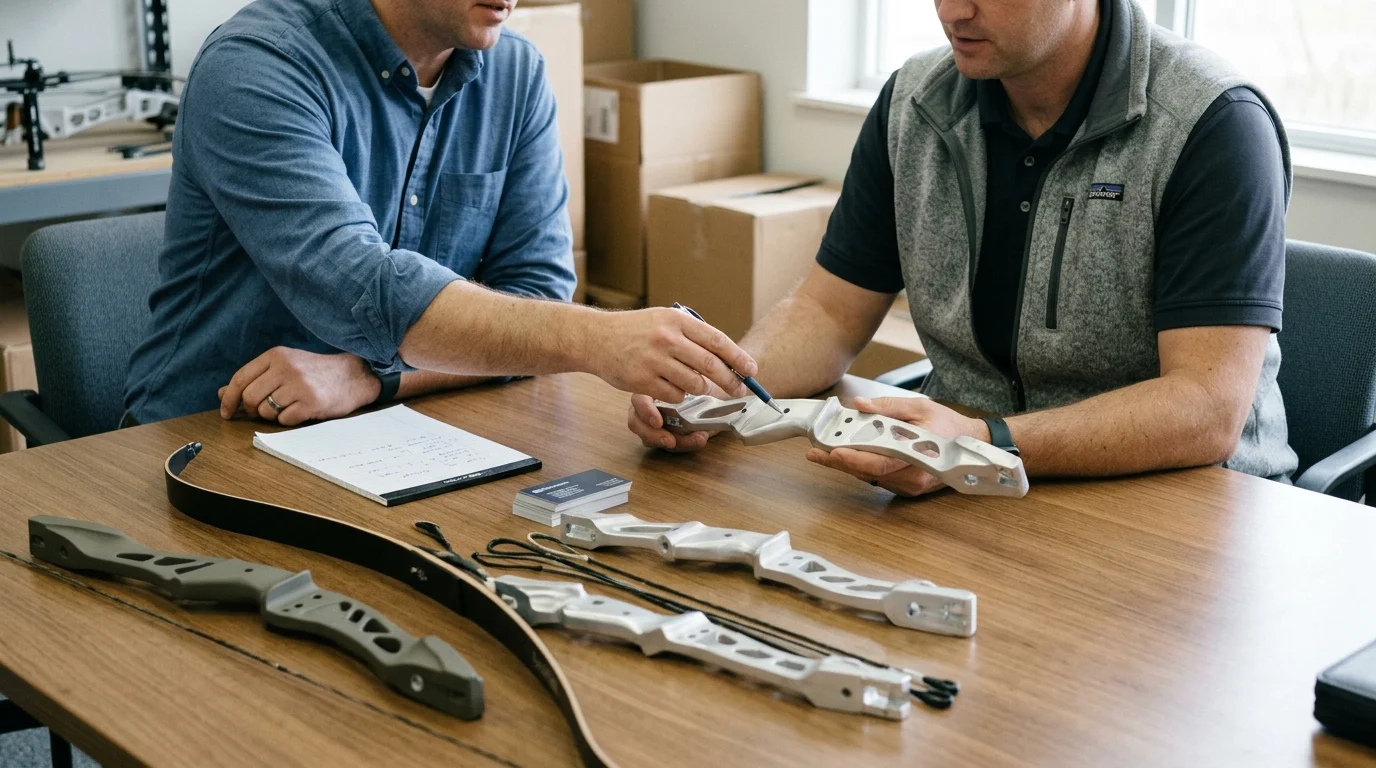
Jumping straight into a massive inventory order without testing the waters is a rookie mistake. Treat your new brand like a lean startup. Validate the product design, test the supplier’s reliability, and gauge customer reactions before writing a massive check. The goal is to build a profitable revenue stream without taking on existential financial risk.
What Step-by-Step Process to Use for Archery Custom Branding
Building a low-risk program requires a step-by-step approach to Brand development. First, order off-the-shelf samples to check baseline anodizing quality, hardware durability, and thread fitment. Second, pay for a small prototype run with your specific logo. Third, execute a pilot run—say, 100 units—to test the waters in your shop. Only after confirming a defect rate of less than 1% and receiving positive feedback should you scale up to a full 1,000-unit production run. This phased approach keeps your cash flow safe and ensures you don’t end up with unsellable gear.
How to Decide Whether OEM Archery Branding Is Right for You
How do you know if your business is ready to pull the trigger? Current sales volume is the ultimate deciding factor. If you are already moving more than 500 units of a specific accessory category every year, you are leaving serious money on the table by not utilizing Archery OEM. However, if you’re a boutique operation selling only a handful of bows a month, the upfront tooling costs and MOQs might tie up too much operating capital. Take a hard look at your trailing twelve months of sales data. If the volume is there, custom branding is the most reliable path to double your profitability.
Key Takeaways
- The most important conclusions and rationale for Archery
- Specs, compliance, and risk checks worth validating before you commit
- Practical next steps and caveats readers can apply immediately
Frequently Asked Questions
What archery products are best to private label first?
Start with high-margin, low-liability items like sights, stabilizers, quivers, soft goods, and arrow components. They usually need less R&D than compound bows and offer faster returns.
How much margin can OEM archery branding add?
Private label accessories can often reach 50% to 75% gross margin, versus roughly 20% to 35% for reselling big brands. Exact results depend on MOQ, shipping, and packaging costs.
What should I check before choosing an OEM archery manufacturer?
Verify archery-specific engineering experience, CNC machining capability, patent awareness, MOQ, lead time, and after-sales support. Ask for samples and confirm tolerance control before placing production orders.
How can I reduce risk when launching a custom archery line?
Begin with a small accessory SKU, approve samples carefully, and test demand before expanding. Define tooling, packaging, defect handling, and delivery terms in writing with your supplier.
Can NBSS Sports help with custom archery product development?
Yes. Based on the site context, NBSS Sports offers custom manufacturing support for archery products, making it useful for OEM sourcing, product category selection, and sample-first development.
Post time: Apr-27-2026