Introduction
In archery, small equipment tolerances can produce visible changes on target, and the bowstring is one of the most sensitive parts in that chain. Its material stability, strand consistency, serving tension, and pre-stretch process all influence draw length, peep alignment, arrow speed, and shot-to-shot repeatability. This article explains the manufacturing science behind high-grade bowstrings and shows why precision matters long before a string ever reaches a bow. By understanding these details, readers can better evaluate string quality, avoid common performance issues, and make smarter decisions when tuning or upgrading their setup.
Why Precision Matters in Archery Bowstring Manufacturing
When I first started tuning bows, I quickly realized that the most expensive riser or cam system in the world won’t save your shot if your string is subpar. The string is the actual engine of the bow; everything else just directs the energy. In my experience, treating bowstrings as an afterthought is the fastest way to ruin consistency. Understanding the manufacturing precision behind them will change the way you look at archery equipment.
Defining a high-grade archery bowstring
What actually makes a string “high-grade”? It comes down to absolute stability under immense pressure. A premium string isn’t just twisted fibers; it is a highly engineered tension cable. Top-tier manufacturers build and pre-stretch their strings under 300 to 400 pounds of pneumatic tension before the serving is even applied. This process removes the initial elasticity from the fibers.
Without this rigorous tensioning, the string will stretch during its first few hundred shots. By investing in High-tension strings, we ensure that the peep sight stays perfectly aligned and the draw length doesn’t creep a fraction of an inch once it is installed on the bow.
Key performance variables
The variables that dictate Archery performance are incredibly unforgiving. We are looking at arrow speed, peep sight rotation, and creep. Creep is the permanent elongation of the string over time, and for a high-grade setup, acceptable creep is effectively zero—or at least under 0.05 inches over the string’s lifespan.
Even a tiny shift in strand tension can cause peep rotation, meaning you draw back and your sight picture is blocked. Precision manufacturing locks these variables down. If the tension is perfectly equalized across all bundles during the build, the string behaves identically on shot one as it does on shot five thousand.
What Distinguishes High-Grade Archery Bowstrings
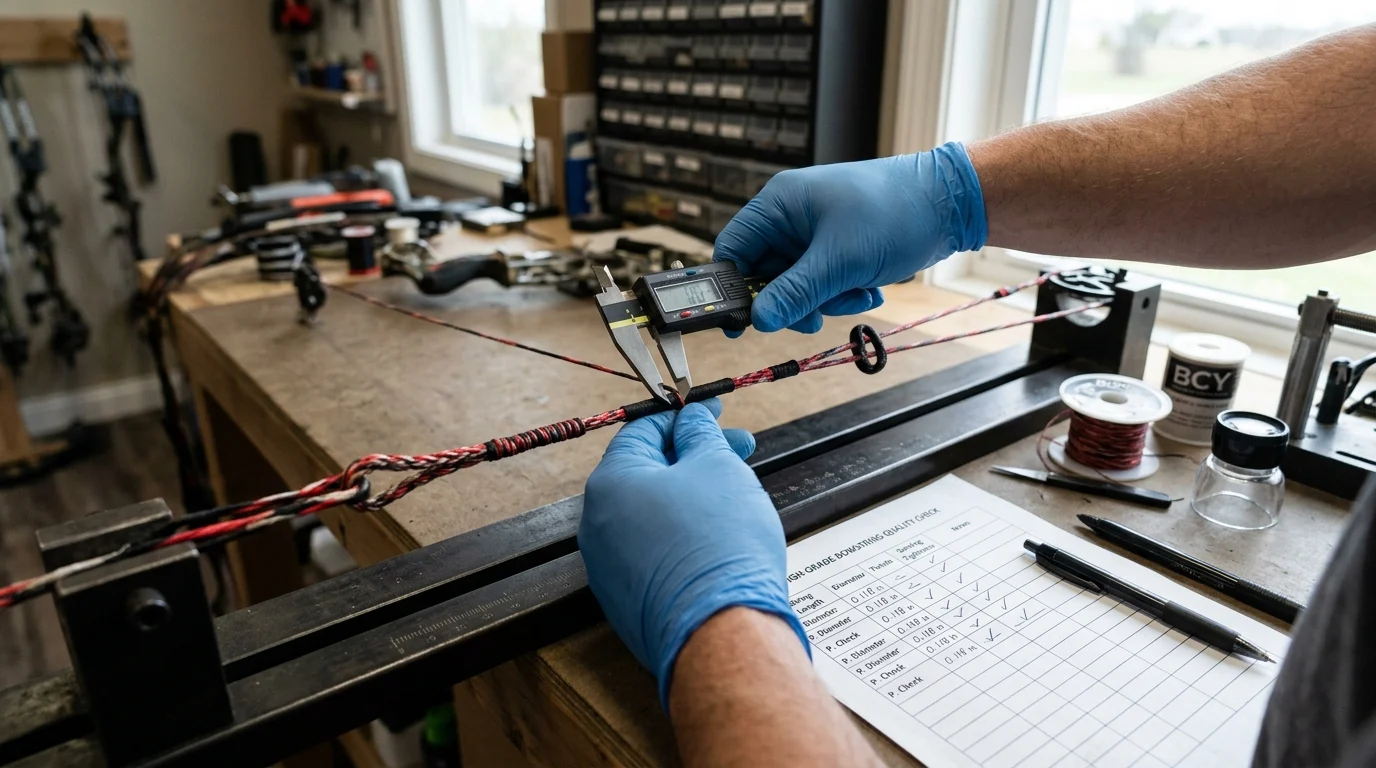
If you want to know what you are actually paying for when upgrading your gear, we have to tear the string down to its raw components. It is a brilliant balancing act of physics, materials science, and mechanical tuning.
Fiber, strand count, twist rate, and serving
Everything starts with the Bowstring material. Modern compound strings usually run 22 to 24 strands of highly specialized synthetic fibers. The twist rate is equally critical; an industry standard for premium builds is roughly 1 twist per 1.5 to 2 inches to keep the bundle round and stable. The serving—the protective thread wrapped tightly around the loops and center—must be applied under exact tension so it doesn’t separate where it rolls over the cams.
Here is a quick breakdown of how common modern fiber blends stack up in the shop:
| Material | Composition | Creep Profile | Speed Output |
|---|---|---|---|
| 452X | 67% SK75 / 33% Vectran | Zero creep | Moderate |
| BCY X99 | 80% SK99 / 20% Vectran | Very low | High |
| Fast Flight | 100% HMPE | Moderate | Very High |
Durability and performance trade-offs
There is always a catch when chasing ultimate speed. Dropping from a standard 24-strand to a 20-strand string might gain you 2 to 4 feet per second (fps) on the chronograph, but you trade away a significant chunk of String durability. Fewer strands mean less mass, but also a higher likelihood of stretching and a harsher shot feel.
A heavy-duty setup with a higher strand count and thicker serving will outlast a speed-focused string, often surviving past the 10,000-shot mark. I always advise balancing your setup based on your discipline. A target archer might prioritize absolute stability with a blended material, while a hunter might want the toughest, most weather-resistant HMPE fiber available.
How to Evaluate Bowstring Quality and Suppliers
Finding a reliable supplier is just as technical as building the string itself. Whether you are stocking a pro shop or launching a private label accessories brand, you need a manufacturing partner who intimately understands the engineering constraints of archery.
Inspection and sourcing steps
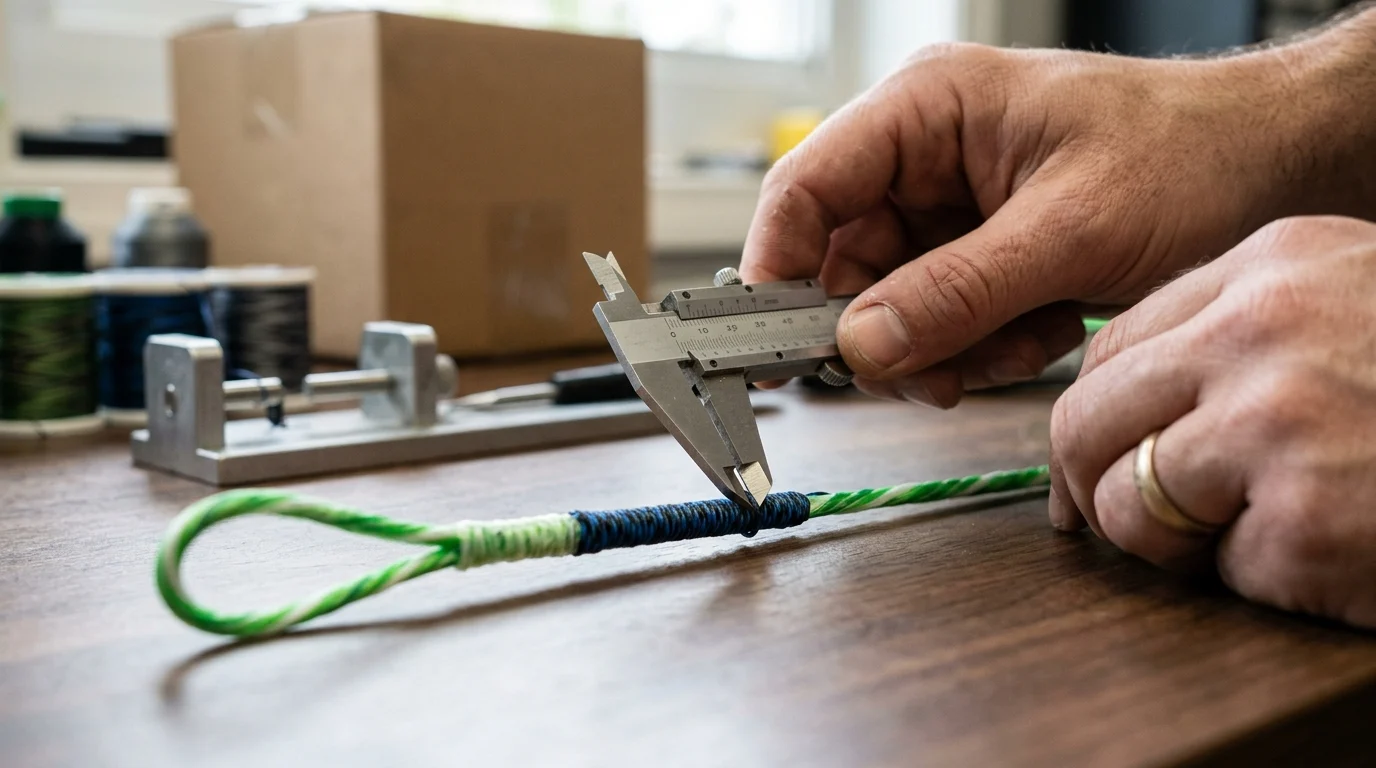
When I evaluate a supplier’s batch, my first step is inspecting the serving under tension. I look for zero serving separation around the cam tracks—anything more than a 0.5mm gap is an immediate fail in my book. I also measure the end loops to ensure they are consistently sized and reinforced against friction.
This level of quality requires serious infrastructure. For instance, at Ningbo S&S Sports Goods Co., Ltd., we lean on over 20 years of experience in the archery and hunting categories. With advanced facilities and high machining techniques, we maintain tight defect rates, ensuring that every string meets strict dimensional tolerances before it ships. We also hold domestic and international patents for a majority of our designs, which speaks to a deep commitment to R&D.
Making the final buying decision
Making the final call on a supplier comes down to their capacity for customization and reliable logistics. Can they handle Custom bowstrings with specific twist rates, proprietary serving layouts, and custom color combinations? You want a partner who welcomes custom designs rather than just pushing off-the-shelf inventory.
For private label orders, you need to look at production scale. A standard Minimum Order Quantity (MOQ) might sit around 100 to 500 sets depending on the customization level, with lead times generally running 30 to 45 days. Factor in their after-sales service and ability to release new developments yearly, and you have a supply chain partner capable of keeping your brand competitive in a highly technical market.
Key Takeaways
- The most important conclusions and rationale for Archery
- Specs, compliance, and risk checks worth validating before you commit
- Practical next steps and caveats readers can apply immediately
Frequently Asked Questions
What makes a high-grade bowstring different?
A high-grade bowstring is pre-stretched under high tension, built with even strand tension, and served precisely. This helps prevent creep, reduces peep rotation, and keeps draw length stable.
How much bowstring creep is acceptable?
For premium performance, creep should be near zero and ideally under 0.05 inches over the string’s life. More than that can affect peep alignment, timing, and consistency.
Does strand count affect speed and durability?
Yes. Lower strand counts can add about 2–4 fps, but usually reduce durability and make the shot harsher. Higher strand counts favor stability and longer service life.
Which bowstring material should I choose?
Choose by use case: 452X for stability, BCY X99 for a balance of low creep and speed, and Fast Flight for maximum speed with more stretch risk. Match the material to your bow and discipline.
How can I evaluate a bowstring supplier like NBSS Sports?
Ask about pre-stretch tension, strand count, twist rate, serving tension, and creep standards. On nbss-sports.com, review product specs and confirm the string matches your bow model and shooting goals.
Post time: Apr-27-2026